
How TREOS Bio uses TCR sequencing to prove its cancer vaccine reaches the tumour
.png)
MSS metastatic colorectal cancer tumours are immunologically cold: few T cells infiltrate them, so checkpoint inhibitors alone rarely work. TREOS Bio is testing whether a peptide vaccine can change that. Eniko Toke, Chief Scientific Officer and co-founder of TREOS Bio, joins the Repertoire Room to walk through the TCR sequencing evidence from a Phase 2 trial run with Mayo Clinic.
Confirming the vaccine's T cells reach the tumour
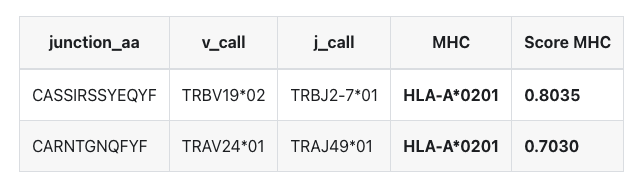
TREOS Bio combined its off-the-shelf vaccine PolyPEPI1018, which targets seven shared tumour antigens selected via an in silico HLA model, with the checkpoint inhibitor atezolizumab. Working with ImmuneWatch, the team trained DETECT on PolyPEPI1018-specific TCR sequences isolated from donor blood, then matched those sequences against T cells found in paired tumour biopsies. The result confirmed that vaccine-induced T cells expanded in both blood and tumour, a level of TCR-specific confirmation Eniko describes as "not possible a few years ago."
Antigen spreading: T cells the vaccine never targeted
The TCR data also caught something else: T cells against tumour antigens never included in the vaccine, including mutant KRAS, appeared after treatment, while bystander T cells specific to pathogens stayed unchanged. Broader tumour-reactive T cell responses also correlated with longer progression-free survival, a pattern TREOS Bio has now observed across three separate trials.
About the guest
Eniko Toke is Chief Scientific Officer and co-founder of TREOS Bio, where she leads the science behind the company's HLA-guided peptide cancer vaccine platform, drawing on a career spanning immunology, computational biology, and pharmaceutical drug development.
Stay up to date
Subscribe to our newsletter to receive useful tips and information.


.png)
