
Shaping the Future of Diagnostics: Key Takeaways from the AI in Health International Conference 2025
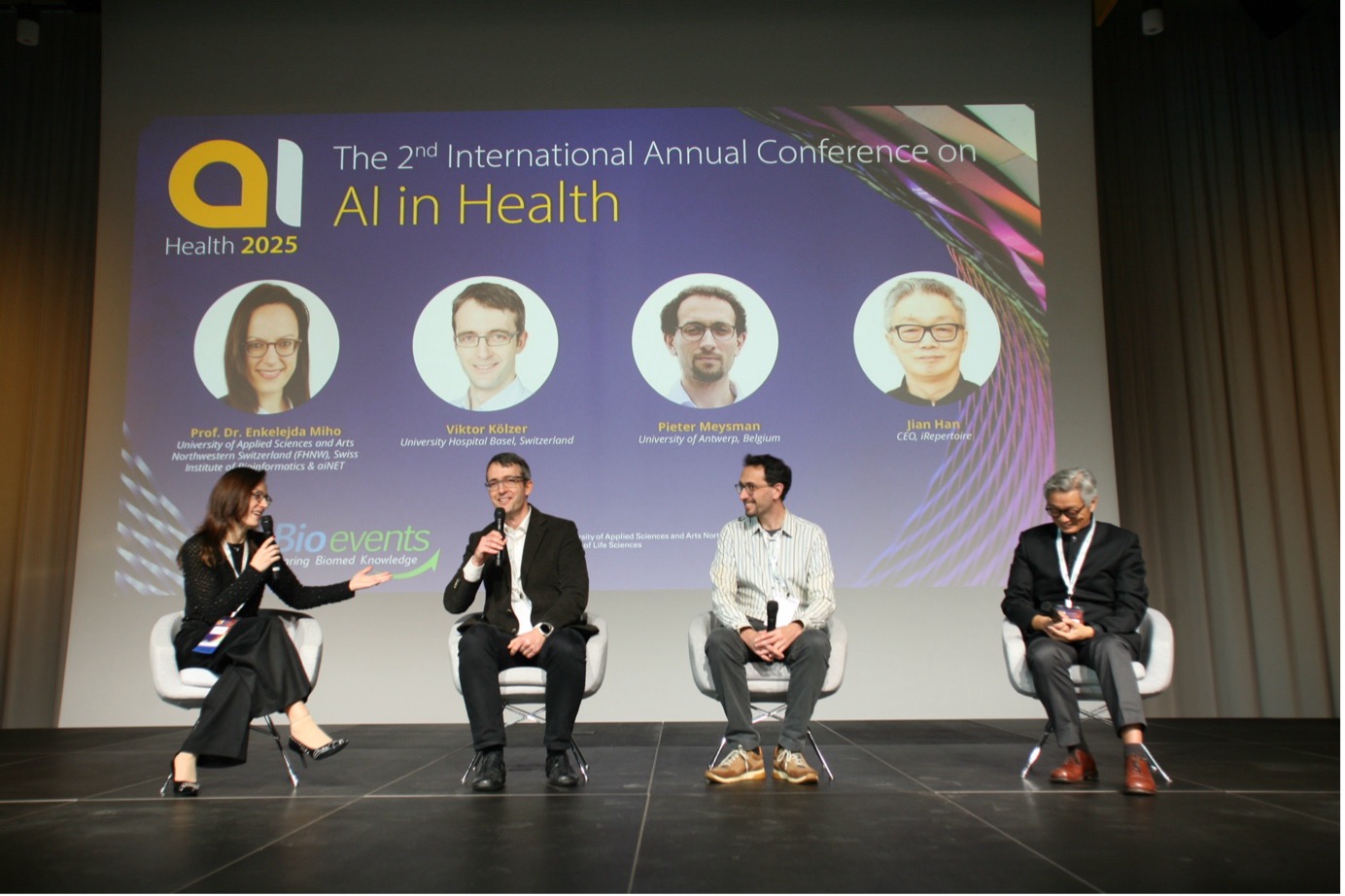
This month, the global healthcare community gathered in Switzerland for the AI in Health International Conference 2025. From November 10–11, leading clinicians, researchers, and innovators convened to explore how artificial intelligence is reshaping the future of medicine.
At ImmuneWatch, we believe that the intersection of biological data and machine learning is where the next generation of precision medicine will be born. We were proud to be part of this transformative dialogue, sharing our expertise in computational immunology and learning from other pioneers in the field.
Here are our top insights from the event and what they mean for the future of drug discovery and diagnostics.
Unlocking the "Immunity Fingerprint" with AI
One of the most anticipated tracks of the conference was Session 2: AI in Diagnostics, which focused on enhancing accuracy in disease detection while accounting for patient preferences.
We were thrilled to see our co-founder, Pieter Meysman, take the stage alongside industry leaders like Jian Han (iRepertoire) and Viktor Kölzer.
Pieter’s presentation centered on a concept that is at the heart of what we do: the "immunity fingerprint." He discussed how we can accelerate disease detection by analyzing the vast complexity of the immune system. In the world of bioinformatics TCR analysis, this concept is critical. Every individual’s T-cell receptor (TCR) repertoire holds a unique historical record of immune exposures.
By applying advanced AI to TCR repertoire analysis, we can now decode these fingerprints to identify novel biomarkers. This session highlighted that we are moving past simple data collection; we are now in an era of TCR biomarker discovery where algorithms can predict disease states with unprecedented sensitivity.
Beyond Diagnostics: Digital Twins and Therapeutics
While our focus remains on the adaptive immune system, the conference illustrated just how broad the AI revolution has become.
- Digital Twins & Regulations: The keynote by Prof. Francesco Pappalardo was a standout moment. He explored the evolution of "Digital Twins"—virtual models of patients that can simulate responses to treatments. This is becoming a crucial tool for navigating regulatory hurdles and de-risking clinical trials.
- AI in Therapeutics: We also saw impressive progress in drug discovery. Dr. Oliver Hijano Cubelos and Dr. Patrick Schorderet led discussions on how pharma and IT are converging to enable personalized treatments. The ability to predict novel antibodies computationally is rapidly closing the gap between the lab bench and the bedside.
- AI for the Citizen: Finally, the "Citizen Health" session reminded us that technology must remain human-centered. Whether it is improving health literacy or helping pharma bring medicines to patients faster, the ethical design of these tools is paramount.
Conclusion: The Era of AI-Driven Immunology is Here
The AI in Health 2025 conference confirmed that the industry is moving away from generic approaches and toward deeply personalized, data-driven solutions.
For researchers and biotech companies, the message is clear: the complexity of the immune system is no longer a barrier—it is an asset. With the right computational immunology tools, we can turn complex sequencing data into actionable medical insights.
Looking to unlock the potential of your data?
If you are overwhelmed by the complexity of T-cell data, ImmuneWatch is here to help. We specialize in turning raw sequencing data into clear biological answers.
Explore our Services: Learn more about our expert Immune repertoire profiling service
Stay up to date
Subscribe to our newsletter to receive useful tips and information.
.gif)


